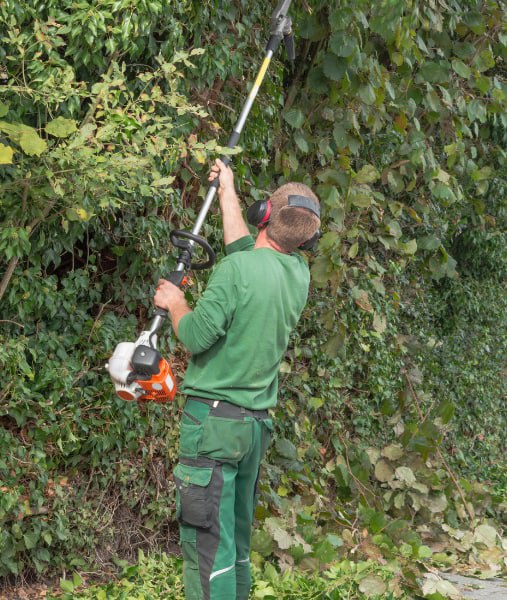
Yes, multiple tree stumps can often be ground during one visit, provided the site is accessible and each stump can be worked on safely. Treating several stumps as one coordinated project can be an efficient way to clear an overgrown garden, prepare land for a new layout or remove obstacles left by earlier tree felling.
For property owners in Tenterden, Kent, professional stump grinding provides a practical alternative to leaving several old stumps to decay naturally. However, the work should begin with an assessment of the stumps, their surroundings and the intended use of the cleared areas.
How Multiple-Stump Grinding Is Planned
The number of stumps alone does not determine whether they can all be ground during one visit. Their size, location, condition and accessibility must also be considered. A professional tree surgeon will assess the full site before deciding how the work should be organised.
The Size of Each Stump
A collection of small stumps may be straightforward to address together, while large or widely spreading stump bases require more time and careful preparation.
The visible diameter is only part of the assessment. Root flares can extend beyond the main stem, and soil or vegetation may conceal the true width of the stump. Clearing around the base helps establish the area that needs to be ground.
Access for Stump-Grinding Equipment
Specialist machinery must be able to reach each stump. Narrow gateways, steps, steep slopes and tight spaces between buildings or garden features can affect which equipment is suitable.
Access should be checked before work begins rather than assumed from photographs alone. Measuring the narrowest entry points and identifying surface changes helps the tree surgeon plan an appropriate route through the property.
The Location of the Stumps
Stumps positioned in open lawn areas are usually easier to approach than those beside walls, fences, sheds, paths or planted borders. Each location requires enough working space for the machine and operator.
Several stumps spread across different parts of the garden can still be treated during one project. The sequence of work may be planned to minimise unnecessary movement and avoid crossing newly cleared areas.
Stumps of Different Ages and Species
Old stumps can be hard and firmly rooted, while others may have softened through decay. Recently felled trees may also have extensive surface roots that remain clearly connected to the stump.
Tree species, age and condition all influence how the timber responds to grinding. A professional assessment helps determine the likely depth and extent of work required for each stump.
How Deep Should Each Stump Be Ground?
The appropriate grinding depth depends on what will happen to the area afterwards. A stump beneath a future lawn may require a different approach from one within a planting bed or a section planned for landscaping.
Explaining the intended use of each area helps ensure the work is completed to a suitable depth. Stump grinding removes the main obstruction below ground level, but it does not normally extract the tree’s entire root system.
What Happens to the Remaining Roots?
Most roots remain in the soil after the stump has been ground and gradually decompose. Large surface roots may sometimes be ground where they create a particular obstruction and can be reached safely.
It is important to distinguish between removing the stump and removing every root. Complete root excavation is a different and much more disruptive process that is not usually necessary for ordinary garden clearance.
Why Remove Several Stumps Together?
Grinding multiple stumps as part of one organised project can provide several practical benefits:
- creates a more consistent garden layout
- removes several mowing and maintenance obstacles
- prepares a wider area for planting or turfing
- clears space for paths, patios or other garden features
- reduces the number of unfinished areas across the property
- allows access and working conditions to be planned together
The most important benefit is that the garden can be assessed as a whole rather than treating each stump without considering the wider layout.
Preparing the Garden Before the Visit
Loose furniture, pots and movable garden items should be cleared from the working areas and access routes. Stumps hidden by long grass or dense vegetation should also be identified.
Let the tree surgeon know about any known obstacles close to the stumps. Avoid attempting to expose roots with machinery or heavy tools, as this can disturb the area without providing the access needed for professional grinding.
What Happens to the Grindings?
Stump grinding produces a mixture of wood fragments and soil. Some material can often be used to fill the resulting depression temporarily, although it may settle as the organic matter breaks down.
Excess grindings may need to be cleared depending on the number and size of the stumps. The intended finish should be discussed before work begins so the site can be left ready for its next use.
When Might More Than One Visit Be Needed?
Although several stumps can often be completed together, additional visits may be appropriate where:
- access must be created before machinery can enter
- vegetation needs to be cleared first
- the stumps are exceptionally large or numerous
- they are located across difficult terrain
- hidden obstacles are discovered
- other tree work must be completed beforehand
A site assessment provides a clearer understanding of what can reasonably be achieved during one visit.
Conclusion
Multiple tree stumps can often be ground during a single visit when access, working space and site conditions are suitable. Planning the work as one project can clear the garden more consistently and prepare several areas for future use.
Each stump should still be assessed individually because size, location and root spread can vary considerably. If you have several stumps to remove in Tenterden, Kent, contact Tenterden Tree Surgeons to arrange a professional assessment and discuss the most suitable approach.
Call us on: 01580 234692
Click here to find out more about Tenterden Tree Surgeons
Click here to complete our contact form and see how we can help with your trees needs.