Large garden trees can provide privacy, shade and an attractive focal point. However, as their canopies continue to develop, branches may begin to obstruct access, reduce natural light or extend towards buildings and other structures.
For property owners in Tenterden, Kent, tree trimming should be based on the condition, species and location of the tree rather than appearance alone. Professional assessment helps determine whether work is necessary and how much growth can be removed without harming the tree or leaving it structurally unbalanced.
Signs That a Large Garden Tree May Need Trimming
Tree trimming can involve removing dead or damaged branches, creating clearance around structures or selectively managing an overgrown canopy. The correct approach depends on the reason for the work and how the tree is likely to respond.
Dead or Damaged Branches Are Visible
Dead branches may remain within a canopy for a considerable time before falling. Cracks, splits, missing bark and a lack of foliage during the growing season can indicate that a branch is declining.
Damaged branches should also be assessed following strong winds. A partially detached limb may be caught within the canopy, making its condition difficult to recognise from ground level.
Branches Are Growing Towards the Property
Branches extending over roofs, gutters, conservatories and outbuildings may cause problems as they grow. Wind can make them rub against roof coverings, while falling leaves and small twigs can restrict guttering.
Selective trimming can provide suitable clearance without unnecessarily reducing the complete canopy. The work should preserve the tree’s natural form and avoid leaving large, poorly positioned wounds.
Lower Branches Are Obstructing Access
Low-growing branches can restrict paths, driveways, seating areas and routine garden maintenance. They may also interfere with visibility around entrances and vehicle access points.
Crown lifting can improve clearance by removing or shortening selected lower branches. Excessive removal should be avoided because it can alter the tree’s balance and place unnecessary stress on the remaining structure.
The Canopy Has Become Excessively Dense
A dense canopy may prevent light from reaching the garden below and restrict airflow through the crown. It can also conceal deadwood, crossing branches and damaged unions.
Crown thinning removes selected secondary growth throughout the canopy while retaining its overall size and shape. This work requires careful judgement, as indiscriminate cutting can create uneven weight distribution and excessive regrowth.
Branches Are Crossing or Rubbing Together
Branches that repeatedly rub against one another can damage their bark and create wounds. Closely crossing limbs may also compete for space as they increase in diameter.
Removing the less suitable branch at an appropriate stage can improve the canopy’s structure. Early intervention is generally preferable to waiting until both branches have become large and difficult to separate.
The Tree Has Become Too Large for Its Position
A healthy tree can still become unsuitable for the space available. Its canopy may dominate a smaller garden, extend across boundaries or grow too close to structures.
Crown reduction may be considered where the height or spread needs to be decreased. Rather than simply cutting branches back to arbitrary points, a tree surgeon should reduce them to suitable growth unions and maintain a balanced outline.
Previous Pruning Has Produced Weak Regrowth
Poorly executed trimming can encourage clusters of fast-growing shoots around large cuts. This regrowth may be weakly attached and can make the canopy denser than before.
Corrective pruning may improve the structure, although the work sometimes needs to be completed gradually. Removing too much growth during one visit can cause further stress and trigger another strong growth response.
The Canopy Appears Unbalanced
A tree may develop more growth on one side because of available light, surrounding structures or earlier branch loss. Long, heavily extended limbs can place additional strain on their attachment points.
Professional trimming can redistribute canopy weight in some situations. However, an unbalanced appearance can also indicate structural damage, so an assessment should take place before work begins.
There Are Warning Signs Within the Canopy
Large garden trees should be inspected when they show:
- Cracks between major branches
- Hanging or partially detached limbs
- Deadwood above regularly used areas
- Fungal growth near branch unions
- Sudden canopy thinning
- Branches moving unusually in windy conditions
- Significant changes following severe weather
These signs do not automatically mean that extensive cutting is needed, but they justify closer professional examination.
Why Large Trees Require Professional Equipment
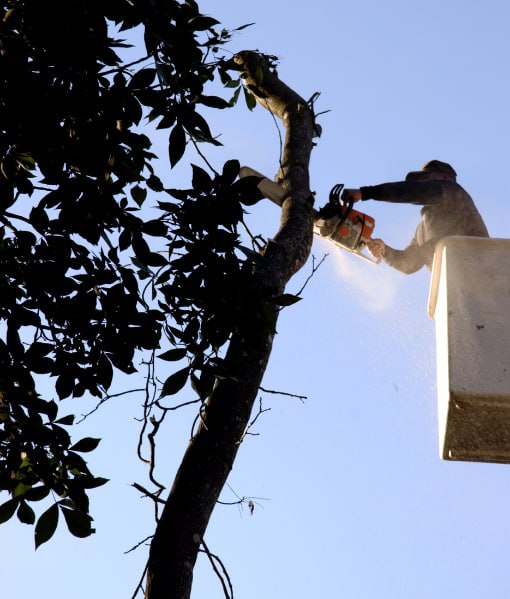
Trimming a mature tree can involve working at height with heavy, tensioned branches. The direction in which a limb falls may be difficult to predict once a cut begins.
Tree surgeons use appropriate access, cutting and lowering equipment to remove sections in a controlled manner. This helps protect the tree, nearby structures, lawns, paving and planting while reducing disruption to the garden.
Why the Correct Trimming Method Matters
Removing too much foliage can reduce a tree’s ability to produce energy. Poor cuts can also damage branch collars, slow natural closure and encourage weak regrowth.
Professional tree trimming considers:
- The reason for the work
- The tree’s species and condition
- Branch structure and weight distribution
- The amount of foliage that can be removed
- Clearance requirements
- The tree’s likely future growth
This measured approach helps achieve the required result without unnecessary intervention.
Conclusion
Tree trimming may be necessary when a large garden tree contains deadwood, obstructs access, grows towards structures or develops an overly dense or unbalanced canopy. The work should be carefully planned around the tree’s condition and natural growth pattern.
Tenterden Tree Surgeons provides professional tree assessments and trimming services in Tenterden, Kent. If a large tree is becoming difficult to manage, contact our team to arrange an assessment and discuss a proportionate solution.
Call us on: 01580 234692
Click here to find out more about Tenterden Tree Surgeons
Click here to complete our contact form and see how we can help with your trees needs